Many of the commonly used food preservatives and microbial agents are synthetic compounds. In recent years, there has been an increased interest in avoiding or eliminating the use of synthetic compounds and in developing and promoting the use of natural materials for use as antimicrobial agents
3
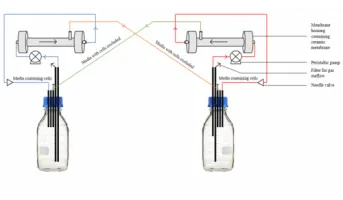
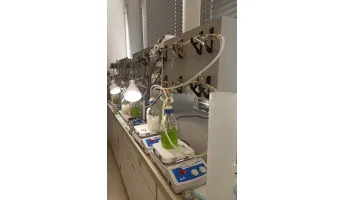
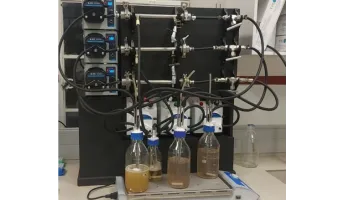
A novel bioreactor system that uses membranes to create a compartmentalised system where two or more species can be co-cultured without mixing of species, while ensuring rapid exchange of metabolites and proteins between compartments and shared medium composition. The system operates continuously
The CSIR has established a bioconversion platform that focuses on alternative pathways for chemical production. The platform is geared towards local production and replacing imports of bio-based platform chemicals, including lactic acid. This shift will have a direct impact on the bioeconomy. The
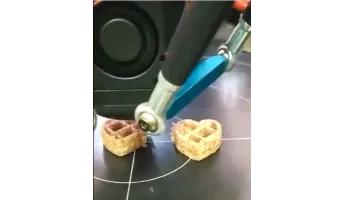
Invention The invention relates to a food ink for use in a 3D printing process for the manufacture of food items, using extrusion-based printing techniques. Problem solved The printer can make foods with elaborate decorations and designs more easily than doing it by hand. It can enhance diversity
Prosopis Glandulosa commonly referred to as Honey Mesquite, has been discovered to strengthen skeletal muscle and boost healing of contused skeletal muscle. The plant is easy and cheap to cultivate. Harvesting of the plant will not deplete any natural resources. Tests on rat models scientifically
Biosurfactants produced by Pseudomonas aeruginosa SB24 (rhamnolipid congeners), Bacillus amyloliquefaciens ST34 (surfactin and bacillomycin L analogues and homologues) and pigmented (P1) and non-pigmented (NP1) Serratia marcescens strains (serratamolide and glucosamine derivative homologues) were
Toxi Trail™ is an educational board game developed at Stellenbosch University to strengthen toxicology knowledge and clinical reasoning among healthcare professionals. Building on earlier game-based learning tools, the design incorporates realistic toxicology scenarios, variable difficulty levels

This technology introduces a new class of zwitterionic polymers designed to gently break apart lipid bilayers and form stable lipid nanodiscs. These nanodiscs can capture and isolate membrane proteins in an environment that closely mimics their natural state. At the core of the invention is a
The Department of Chemical Engineering at Stellenbosch University has developed a novel solvent-based process for extracting cannabinoids directly from plant-wax waste streams generated during industrial processing. The method uses a simple but effective combination of two immiscible solvents, one
This technology makes it possible to grow tiny, three-dimensional (3D) pieces of human heart tissue, called cardiac spheroids. It models the functions of a real heart and recreates key features of cardiometabolic disease such as insulin resistance and high fat levels. What makes this technology a
Researchers at Stellenbosch University have developed a proprietary buffer that enables a high-temperature (50°C) IVT process, solving a key industry challenge. Unlike standard buffers that suffer a ~40% yield loss at high temperature, this formulation maintains ~93% RNA yield with standard enzyme
Many filtration systems overlook a major issue for oxygen-sensitive liquids like wine: oxidation during transfer and filtration. Even small amounts of oxygen can degrade quality. This apparatus provides a closed, inert-gas-pressurized filtration system that keeps wine fully protected from oxygen