

SDG Intro

Goal 15: Life on land
Sustainably manage forests, combat desertification, halt and reverse land degradation, halt biodiversity loss

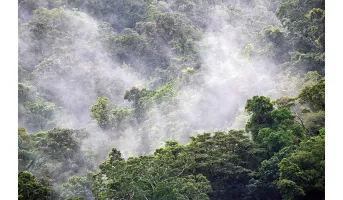
Protection of forest and terrestrial ecosystems is on the rise, and forest loss has slowed. That said, other facets of terrestrial conservation continue to demand accelerated action to protect biodiversity, land productivity and genetic resources and to curtail the loss of species.
SDG Stories

The Sahel is an area that, over time, has had multiple definitions, climatic-botanical and political: its limits have been traced in very different ways. Even the usage of this name and its delimitation on maps has been openly questioned and contested. Our contribution proposes a cartography capable...

READ MORE

Critical natural assets are defined as the natural and semi-natural terrestrial and aquatic ecosystems required to maintain 12 of nature’s ‘local’ contributions to people (local NCP) on land. 12 Local NCP for key benefits like security in food, water, hazards, material and culture. as follows: for...

READ MORE

The data provided here are the result of a time-series analysis of carbon density change (in Mg/ha) between 2003-2014 spanning tropical America, Africa, and Asia (23.45 N lat.-23.45 S lat.). The original data is provided as two separate rasters representing (1) carbon density net gain and (2) carbon...

READ MORE

The Dead Wood Carbon and Litter Carbon pools have been estimated at global level as constant fractions of ESA Biomass CCI Above Ground Biomass (AGB), v.3 (2018) using a lookup table based on global ecological zone, elevation and precipitation regime, as proposed by Harris, N.L., Gibbs, D.A., Baccini...

READ MORE

Carbon storage in biomass (biological material) is a key link in the global carbon cycle, and consequently for climate change mitigation. Forests in particular are an important carbon sink that help reduce the greenhouse effect. Together, the above-ground carbon (carbon fraction contained in the...

READ MORE

Agricultural drought events can affect large regions across the world. Soil moisture (or soil water content) is an important variable for plant growth, and - together with precipitation and evapotranspiration - is a basic component of the hydrological cycle. The Soil Moisture Anomaly (SMA) indicator...

READ MORE

Critical natural assets are defined as the natural and semi-natural terrestrial and aquatic ecosystems required to maintain 12 of nature’s ‘local’ contributions to people (local NCP) in the ocean (blue). 12 Local NCP for key benefits like security in food, water, hazards, material and culture. as...

READ MORE

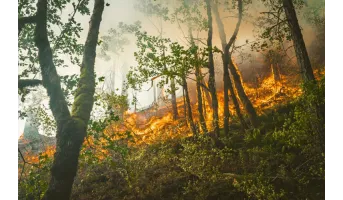
The Fire Information for Resource Management System (FIRMS) of the National Aeronautics and Space Administration (NASA) uses satellite observations to detect active fires and thermal anomalies. They deliver this information to decision makers in near real-time (within 3 hours of satellite...

READ MORE

The Fire Information for Resource Management System (FIRMS) of the National Aeronautics and Space Administration (NASA) uses satellite observations to detect active fires and thermal anomalies. They deliver this information to decision makers in near real-time (within 3 hours of satellite...

READ MORE

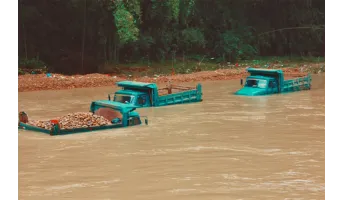
River floods are recognized as one of the major causes of economic damages and loss of human lives worldwide. Quantifying flood hazard is an essential component of resilience planning, prevention measures, emergency response, and mitigation, including insurance. This map depicts flood prone areas...

READ MORE

Evapotranspiration and carbon fluxes between the biosphere and the atmosphere are routinely expressed in terms of the Leaf Area Index (LAI) of the canopy. Monitoring the change of LAI is essential for assessing the evolution of the vegetation over Africa. LAI anomalies relative to the average values...

READ MORE

The Fraction of Photosynthetically Active Radiation Absorbed (FAPAR) is used to track the overall primary productivity associated with atmospheric CO2 fixation. FAPAR anomalies relative to the average between 2003 and 2010 show large surface variations, in terms of values and coverage, of vegetation...

READ MORE