The CSIR has established a bioconversion platform that focuses on alternative pathways for chemical production. The platform is geared towards local production and replacing imports of bio-based platform chemicals, including lactic acid. This shift will have a direct impact on the bioeconomy. The
3
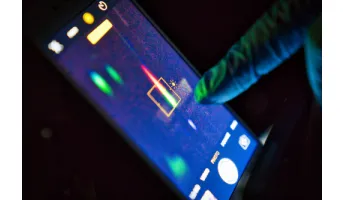
The CSIR has developed a smartphone technology that is used as a detection system for analysing biomolecular assays or chemical reactions. The smartphone is used to capture one or more images of the biomolecular assays, which are processed by way of bespoke hardware and software to provide
Researchers at Stellenbosch University have developed a proprietary buffer that enables a high-temperature (50°C) IVT process, solving a key industry challenge. Unlike standard buffers that suffer a ~40% yield loss at high temperature, this formulation maintains ~93% RNA yield with standard enzyme
A biological solution using yeast strains which naturally remove chitinase enzymes responsible for haze formation. Adding these yeast cells to wine or grape must results in a crystal-clear product without the need for bentonite or synthetic additives.
This technology provides a software solution that facilitates the rapid detection of viral particles in any electron micrograph. It utilizes a neural network approach to enable automated virus recognition. It is based on a convolutional neural network/machine-learning based image analysis tool, that
Stellenbosch’s solution is a 2-component injectable hydrogel designed to block the vas deferens, thus preventing the passage of sperm cells. Unlike a vasectomy, this hydrogel is reversible, restoring fertility. The hydrogel is formulated from two aqueous polymer solutions with complementary reactive
TheUltra-Portable Urodynamic Device (uPUDS) device is connected to the patient via two catheters: one placed in the rectum and one in the bladder (this is standard for urodynamic devices). The catheters are connected to pressure sensors on the device. The pressure that is measured is transmitted to
2
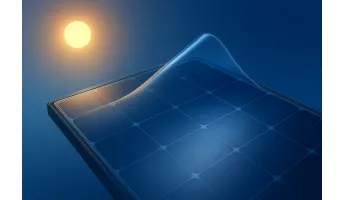
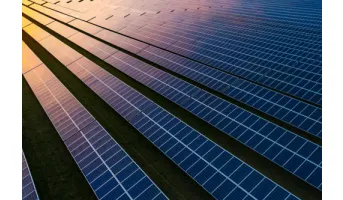
The technology uses a clear polymer film embedded with luminescent compounds that absorb high-energy UV light and re-emit it as blue light, which solar cells can convert more efficiently into electricity. This film works with all types of solar panels and can be applied to existing installations
The biological sand filtration system is a simple, cost-effective solution used to improve the quality of winery wastewater for reuse (e.g., for beneficial irrigation). The system can operate entirely off-grid using solar panels and gravity for energy. Microbial communities within the system degrade