Toxi Trail™ is an educational board game developed at Stellenbosch University to strengthen toxicology knowledge and clinical reasoning among healthcare professionals. Building on earlier game-based learning tools, the design incorporates realistic toxicology scenarios, variable difficulty levels
ImmerseCell is a virtual reality experience (VLE) to teach undergraduate and postgraduate students about key cellular structures with an interactive, narrated, guided experience (Figure 1, Figure 2). The team utilised real-world microscopy data of various key cellular structures in the mammalian
This technology makes it possible to grow tiny, three-dimensional (3D) pieces of human heart tissue, called cardiac spheroids. It models the functions of a real heart and recreates key features of cardiometabolic disease such as insulin resistance and high fat levels. What makes this technology a
A cadaver dissection table that consists of a long tray designed to hold a cadaver. The tray has openings for fluid drainage and an angled section at one end. The table also has ventilation holes angled toward the flat part of the tray where the cadaver rests. Below the tray is a long bath, and
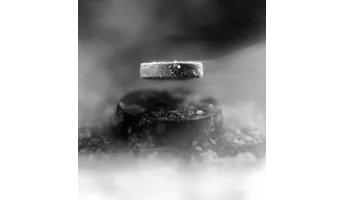
FemtoFab™ introduces an automated femtosecond laser-based process for the fabrication of micro and nano-constriction structures on high temperature superconducting (HTS) thin films such as YBa₂Cu₃O₇-ₓ. The technique enables the precise and reproducible formation of superconducting nano- and micro
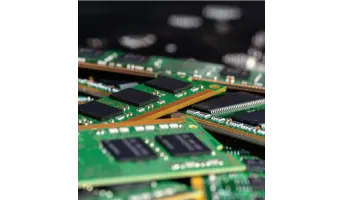
BioReRAM™ is a novel non-volatile Resistive Random-Access Memory (ReRAM) technology that utilises a bio-based switching/active layer made from milk or a milk-based emulsion. The resistive switching layer, located between two electrodes, contains lactose, fat, protein, and water - components