The CSIR has established a bioconversion platform that focuses on alternative pathways for chemical production. The platform is geared towards local production and replacing imports of bio-based platform chemicals, including lactic acid. This shift will have a direct impact on the bioeconomy. The

The technology relates to an application that allows the efficient delivery of groceries ordered online by using a car lift service from general road drivers. Unlike existing delivery applications, this platform does increase the reliance on dedicated delivery vehicles but makes use of a network of

The technology relates to a new generation of telecommunications and data processing technology with improved wavelength sensitivity in the visible and near-infrared wavelengths range rather than microwave communication in 2–4 GHz. The technology provides the realisation of optical sources (LEDs)

A mobile application to facilitate the efficient delivery of artemisinin-based combination therapies (ACTs) which are dependent on a multi-embedded supply chain coordination for the distribution of malaria drugs. The distribution of these is hampered by a lack of coordination among stakeholders

An engineer at Nelson Mandela University has developed a secure storage trolley for tablet computers. The storage also has a charging component which allows for them to be charged while safely stored.

Prosopis Glandulosa commonly referred to as Honey Mesquite, has been discovered to strengthen skeletal muscle and boost healing of contused skeletal muscle. The plant is easy and cheap to cultivate. Harvesting of the plant will not deplete any natural resources. Tests on rat models scientifically

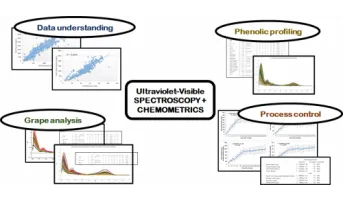
PhenoLAB is an online web-based analyses platform and database for wine producers. PhenoLAB incorporates highly accurate, extensive and robust analyses methods based on absorbency values for determining tannins, colour density, anthocyanins and total phenolics levels in grapes, fermenting must and


Toxi Trail™ is an educational board game developed at Stellenbosch University to strengthen toxicology knowledge and clinical reasoning among healthcare professionals. Building on earlier game-based learning tools, the design incorporates realistic toxicology scenarios, variable difficulty levels
This technology introduces a new class of zwitterionic polymers designed to gently break apart lipid bilayers and form stable lipid nanodiscs. These nanodiscs can capture and isolate membrane proteins in an environment that closely mimics their natural state. At the core of the invention is a
The Department of Chemical Engineering at Stellenbosch University has developed a novel solvent-based process for extracting cannabinoids directly from plant-wax waste streams generated during industrial processing. The method uses a simple but effective combination of two immiscible solvents, one
This technology makes it possible to grow tiny, three-dimensional (3D) pieces of human heart tissue, called cardiac spheroids. It models the functions of a real heart and recreates key features of cardiometabolic disease such as insulin resistance and high fat levels. What makes this technology a
Researchers at Stellenbosch University have developed a proprietary buffer that enables a high-temperature (50°C) IVT process, solving a key industry challenge. Unlike standard buffers that suffer a ~40% yield loss at high temperature, this formulation maintains ~93% RNA yield with standard enzyme