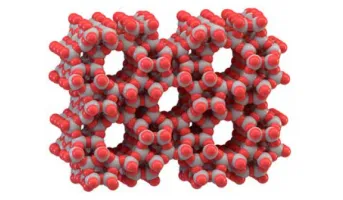
Fly ash is a waste by-product generated by coal-fired electricity power stations. Due to its environmental impact, there is a growing need for safe and sustainable methods of fly ash disposal. One effective approach is the beneficiation of fly ash through the production of zeolites—a class of
The North-West University (NWU) has pioneered the novel use of Europium-Tellurium-Oxide (ETO) in the production of clean energy. ETO is a light-chargeable catalyst material that exhibits sustained and enhanced activity after light excitation has ended. Its unique characteristics present an
2
The invention relates to a novel process of partial oxidation of un-agglomerated chromite ore in ferrochrome production processes. The process includes the steps: Providing a source of un-agglomerated chromite ore; subjecting the source of un-agglomerated chromite ore to pre-oxidation at a

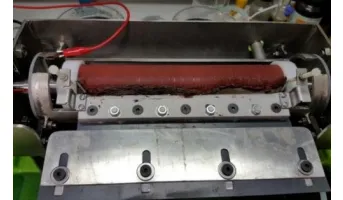
Industrial electrowinning is one such example where archaic technology has become the norm, with innovation being limited simply because the process is “good enough”. After doing a fundamental analysis on the electrowinning process, the design team has invented a dynamic solution which improves on


The DarkLight™ Catalyst is an advanced, biosynthesised titanium dioxide (TiO₂) photocatalyst that functions efficiently without the need for visible or ultraviolet light. Developed through a green synthesis process using natural extracts from Hibiscus sabdariffa, the material features an oxygen
The PureLite Reactor™ provides a highly efficient and customisable platform for various applications. Its energy-efficient LED light sources, advanced control systems, and versatile design give researchers precise control over photochemical reactions, making it a vital tool in environmental science
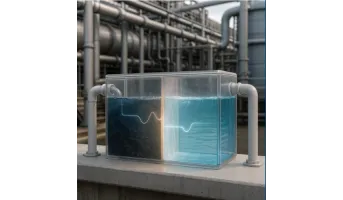
MagNanoClean™ is an innovative method and apparatus for fluid treatment that leverages charged nanoparticles and a moving magnetic system to remove impurities efficiently and sustainably. In this process, contaminants are trapped by the charged nanoparticles suspended in a reactor. When activated
The technology is a membrane-based system developed from waste expanded polystyrene (EPS) using electrospinning to create a nanofibrous material with superhydrophobic (water-repelling) and superoleophilic (oil-attracting) properties. It enables crude oil adsorption, recovery, and membrane
AquaCarbon™ introduces a high-performance membrane technology designed for membrane distillation desalination. The innovation integrates multi-walled carbon nanotubes (MWCNTs) into polyvinylidene fluoride (PVDF) membranes to create a robust, highly hydrophobic, and porous structure capable of
The invention uses maghemite nanoparticles at pH levels below 5 to remove sulphate, manganese, copper, nickel, cobalt, and zinc ions from acid mine drainage (AMD). In traditional AMD treatment methods, these contaminants are usually removed only at higher pH levels, which requires expensive alkaline
This technology offers an innovative and eco-friendly method for producing ferric chloride (FeCl₃), a commonly used coagulant in water purification, by recovering Fe(III) from acid mine drainage (AMD). AMD is a significant pollutant generated by mining activities and typically contains high levels