The Natural Biostimulant developed at the University of the Western Cape is a proudly South African, cost-effective, safe, natural and organic botanical fertiliser with promising commercial applications in the agriculture sector. Derived from an indigenous plant extract, the product contains a


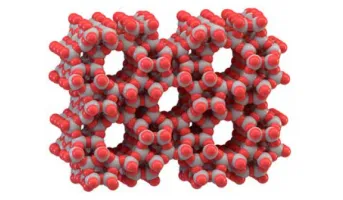
Fly ash is a waste by-product generated by coal-fired electricity power stations. Due to its environmental impact, there is a growing need for safe and sustainable methods of fly ash disposal. One effective approach is the beneficiation of fly ash through the production of zeolites—a class of
This technology utilises a microchannel reactor for the decomposition of ammonia, comprising two chambers: one for exothermic combustion of ammonia to generate heat. A second chamber of the reactor with a second catalyst receives a second stream of ammonia to provide endothermic decomposition of the
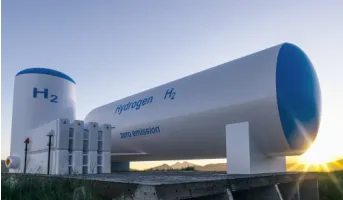
The North-West University (NWU) has developed and patented a method for producing hydrogen via hydrolysis, using an activated aluminium compound. Technology Benefits: Aluminum also can be recycled after the hydrogen production process. Hydrogen can be produced under high pressure. By-products are
3
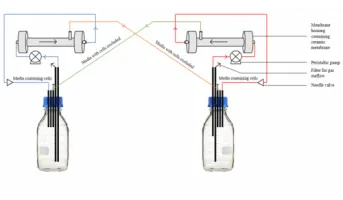
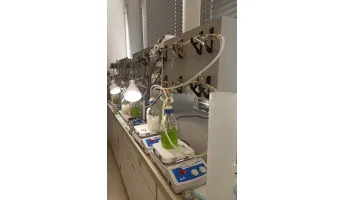
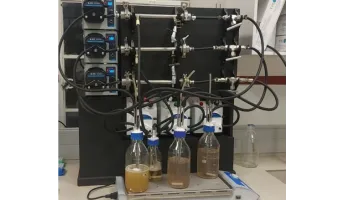
A novel bioreactor system that uses membranes to create a compartmentalised system where two or more species can be co-cultured without mixing of species, while ensuring rapid exchange of metabolites and proteins between compartments and shared medium composition. The system operates continuously
The recombinant LSDV-BCoV vaccine is an innovative dual vaccine designed to provide simultaneous protection against Lumpy Skin Disease Virus (LSDV) and Bovine Coronavirus (BCoV). It utilises a recombinant LSDV vector to express key BCoV antigens, including the spike (S1 and S2 subunits) and
The CSIR has established a bioconversion platform that focuses on alternative pathways for chemical production. The platform is geared towards local production and replacing imports of bio-based platform chemicals, including lactic acid. This shift will have a direct impact on the bioeconomy. The

Conventional irrigation sprinklers which are fitted with rises pipes above the ground are prone to mechanical damage and disorientation. As a result, the lifespan of the irrigation system is shortened or the potential of irrigation systems to optimally irrigate the required surface areas are

An irrigation sprinkler riser technology which comprises of a flexible tubular body which is installed to join from the lateral water supply pipe to the sprinkler head, allowing adjustable positioning of the sprinkler at various angles or directions by means of an adjustable knob. The body of the

2

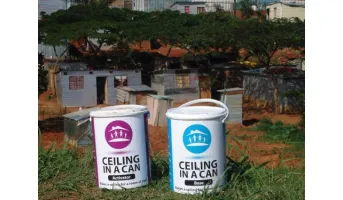
CEILING IN A CAN (CiC) is a patented innovation that aims to create better-living conditions for indigent people by providing an instant ceiling. This fresh technology originating from MUT involves two 5 litre cans containing different polymers. By spreading newspaper on the floor and mixing the two

3
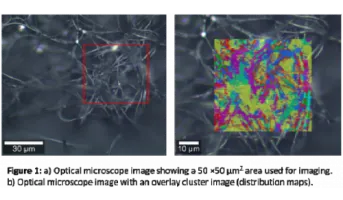
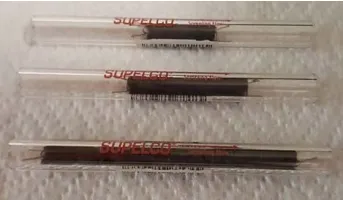
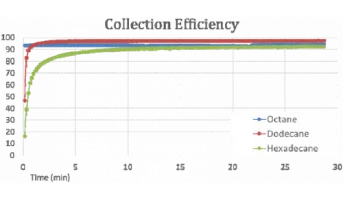
Air quality is a concern worldwide. Consequently, efficient means to monitor air pollutants are critical. Current commercially available carbon-based sorbents used for sampling volatile organic compounds (VOCs) in air typically require solvent extraction prior to analysis, and they cannot be reused
The invention relates to a process for producing protein microparticles in dilute organic acid solutions, without the presence of an alcohol such as ethanol. The microparticles are formed by dissolving a cereal prolamin protein in a concentrated organic acid solution with agitation, followed by