The invention relates to a membrane technology developed using polymeric material, to recover crude oil found in water due to spillages. Although several techniques have been employed for removing crude oil from bodies of water, these techniques are either focused on dissolving the spilled oil

A method and apparatus for treating a fluid utilising nanoscience. The impurities in the fluid are trapped by the charged nanoparticles. The fluid is contained in a reactor that includes a moving magnetic system. When the reactor is in use, the moving magnetic system excites the charged

The invention relates to the design of a robust membrane for desalination, using membrane distillation (MD). Although MD technology has advanced over the years, its industrial application for the treatment of brackish water and seawater continues to lag behind. This invention exhibits advantages
The technology involves a method and an apparatus for treating a fluid, using nanoscience. Impurities in the fluid are trapped by nanoparticles. The fluid is contained in a reactor that includes a moving magnetic system. When the reactor is in use, the moving magnetic system excites the charged
2
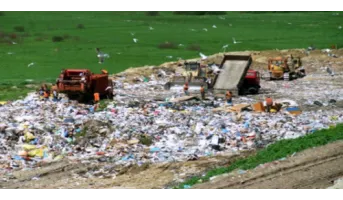
The invention The invention uses plastic waste and Waste Foundry Sand (WFS) to produce building and construction material with a density of between 1700 and 1750 kg/m 3 . The plastic is melted and WFS is used to produce a paste for the moulding of building material. Problem solved Plastics are vital

Using a metallurgical waste product, the invention consists of a method to treat acidic water from mining sites. The treated water can be used for industrial applications or, with additional steps, be treated for potable usage. Water is currently a scarce resource in South Africa, and the depletion


Planktonic or free-living microbes naturally adhere to the sensing surface of the BioTrac system. These biofilms are representative of the physical biofouling that occurs on surfaces in the test environment. The microbes produce carbon dioxide (CO₂) as a byproduct of metabolic activity. The rate of
The DarkLight™ Catalyst is an advanced, biosynthesised titanium dioxide (TiO₂) photocatalyst that functions efficiently without the need for visible or ultraviolet light. Developed through a green synthesis process using natural extracts from Hibiscus sabdariffa, the material features an oxygen
The PureLite Reactor™ provides a highly efficient and customisable platform for various applications. Its energy-efficient LED light sources, advanced control systems, and versatile design give researchers precise control over photochemical reactions, making it a vital tool in environmental science
CloudHarvest ™ is an innovative solution that tackles the rising frequency of droughts and water shortages caused by climate change. It offers a sustainable way to influence weather patterns and water availability in vulnerable regions. During severe droughts, cloud seeding has been proven as an
MagNanoClean™ is an innovative method and apparatus for fluid treatment that leverages charged nanoparticles and a moving magnetic system to remove impurities efficiently and sustainably. In this process, contaminants are trapped by the charged nanoparticles suspended in a reactor. When activated
The technology is a membrane-based system developed from waste expanded polystyrene (EPS) using electrospinning to create a nanofibrous material with superhydrophobic (water-repelling) and superoleophilic (oil-attracting) properties. It enables crude oil adsorption, recovery, and membrane