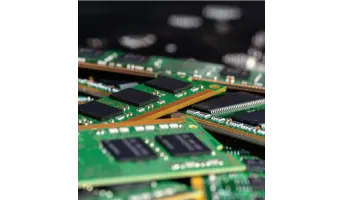
BioReRAM™ is a novel non-volatile Resistive Random-Access Memory (ReRAM) technology that utilises a bio-based switching/active layer made from milk or a milk-based emulsion. The resistive switching layer, located between two electrodes, contains lactose, fat, protein, and water - components
The technology is a membrane-based system developed from waste expanded polystyrene (EPS) using electrospinning to create a nanofibrous material with superhydrophobic (water-repelling) and superoleophilic (oil-attracting) properties. It enables crude oil adsorption, recovery, and membrane
This Transformable Automated Robotic Workspace (TARWSTM) is a versatile, foldable, and tech-enabled work surface designed for both professional and educational environments. The system incorporates a wide range of features, including self-sanitisation, temperature monitoring, solar energy storage
The invention uses maghemite nanoparticles at pH levels below 5 to remove sulphate, manganese, copper, nickel, cobalt, and zinc ions from acid mine drainage (AMD). In traditional AMD treatment methods, these contaminants are usually removed only at higher pH levels, which requires expensive alkaline

TraffiGO™ is an invention that introduces an intelligent, autonomous, and portable traffic light system designed for efficient management of traffic with minimal infrastructure. By integrating advanced technologies such as solar power, AI-driven traffic control, LIDAR-based vehicle detection, and
This invention introduces a novel anti-cancer therapy derived from structural modifications of ezetimibe, a known cholesterol absorption inhibitor. The modified compound has been designed to address ezetimibe’s limitations in bioavailability and metabolic stability, especially for oral
The invention is a versatile healthcare assistance device designed to help individuals with vision, mobility, and speech impairments. It combines robotics, telemetry, advanced sensors, and voice control features to provide flexible support. By merging multiple assistive functions into one device, it
PhotoNANOX™ is a cutting-edge photosensitising nanocomposite material engineered to deactivate microbial biofilms and degrade organic contaminants in water systems. The material combines porphyrin-based photosensitisers—specifically indium derivatives—with semiconductor metal oxide nanoparticles
This technology offers an innovative and eco-friendly method for producing ferric chloride (FeCl₃), a commonly used coagulant in water purification, by recovering Fe(III) from acid mine drainage (AMD). AMD is a significant pollutant generated by mining activities and typically contains high levels
This technology provides a new, eco-friendly way to produce tiny, one-dimensional (1D) crystals of calcium carbonate (CaCO₃), a common material found in substances like chalk and limestone. Unlike traditional methods, this process operates at room temperature and pressure, using only water and a
This invention introduces a photocatalytic water filtration system designed to purify contaminated water using nanotechnology, capillary coils, and light-activated self-cleaning filtration. The system incorporates a spongy nanofiber-based photocatalytic filter bed within coiled capillary tubes. When
Current Proton Exchange Membranes (PEMs), especially Nafion, are costly and produced mainly by a single international supplier (DuPont/Chemours). This monopoly escalates the cost of fuel cells and electrolyzers and limits local manufacturing capacity in South Africa. Because PEMs are the major