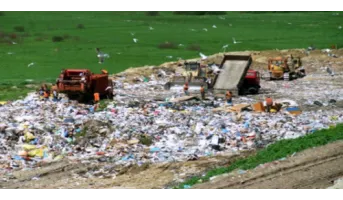
Fly ash is a waste by-product generated by coal-fired electricity power stations. Due to its environmental impact, there is a growing need for safe and sustainable methods of fly ash disposal. One effective approach is the beneficiation of fly ash through the production of zeolites—a class of
Surfactants are amphipathic molecules with both hydrophilic and hydrophobic moieties that partition preferentially at the interface between fluid phases, such as oil/water or air/water interfaces. Such characteristics confer excellent detergency, emulsifying, foaming, and dispersing traits, which
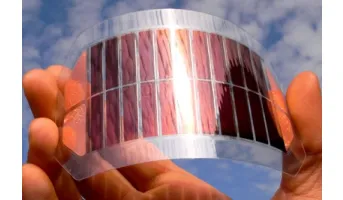
The North-West University (NWU) has pioneered the novel use of Europium-Tellurium-Oxide (ETO) in the production of clean energy. ETO is a light-chargeable catalyst material that exhibits sustained and enhanced activity after light excitation has ended. Its unique characteristics present an
2
The invention relates to a novel process of partial oxidation of un-agglomerated chromite ore in ferrochrome production processes. The process includes the steps: Providing a source of un-agglomerated chromite ore; subjecting the source of un-agglomerated chromite ore to pre-oxidation at a

The Cleancolytic Reactor System developed at the Cape Peninsula University of Technology is a one-step waste water treatment system consisting of highly reactive nanoparticles immobilized in a specialised reactor system for the purpose of treating industrial wastewater. The system utilizes a

The invention relates to the design of a robust membrane for desalination using membrane distillation (MD). Although MD technology has advanced over the years, its industrial application for the treatment of brackish water and seawater is still lagging. This invention exhibits advantages over the

The invention relates to the use of maghemite nanoparticles at pH < 5 to remove sulphate, manganese, copper, nickel, cobalt and zinc metal ions from acid mine drainage (AMD). In a conventional way of AMD treatment, these pollutants are only removed at higher pH and requires costly alkaline chemicals


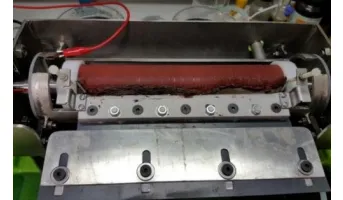
A method and apparatus for treating a fluid utilising nanoscience. The impurities in the fluid are trapped by the charged nanoparticles. The fluid is contained in a reactor that includes a moving magnetic system. When the reactor is in use, the moving magnetic system excites the charged

The invention relates to a membrane technology developed using polymeric material to recover crude oil found in water due to spillages. Although several techniques have been employed for the removal of crude oil from water bodies, these techniques are either focused on dissolving the spilled oil

The invention relates to the design of a robust membrane for desalination using membrane distillation (MD). Although MD technology has advanced over the years, its industrial application for the treatment of brackish water and seawater is still lagging. This invention exhibits advantages over the

The technology involves a method and an apparatus for treating a fluid, using nanoscience. Impurities in the fluid are trapped by nanoparticles. The fluid is contained in a reactor that includes a moving magnetic system. When the reactor is in use, the moving magnetic system excites the charged

Industrial electrowinning is one such example where archaic technology has become the norm, with innovation being limited simply because the process is “good enough”. After doing a fundamental analysis on the electrowinning process, the design team has invented a dynamic solution which improves on