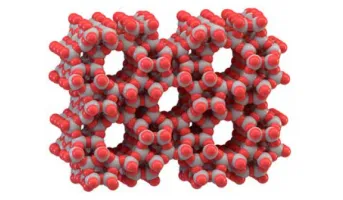
Fly ash is a waste by-product generated by coal-fired electricity power stations. Due to its environmental impact, there is a growing need for safe and sustainable methods of fly ash disposal. One effective approach is the beneficiation of fly ash through the production of zeolites—a class of
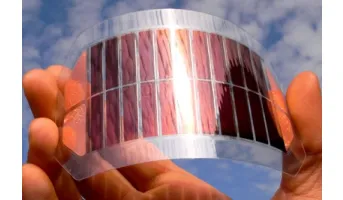
The North-West University (NWU) has pioneered the novel use of Europium-Tellurium-Oxide (ETO) in the production of clean energy. ETO is a light-chargeable catalyst material that exhibits sustained and enhanced activity after light excitation has ended. Its unique characteristics present an
2
The invention relates to a novel process of partial oxidation of un-agglomerated chromite ore in ferrochrome production processes. The process includes the steps: Providing a source of un-agglomerated chromite ore; subjecting the source of un-agglomerated chromite ore to pre-oxidation at a

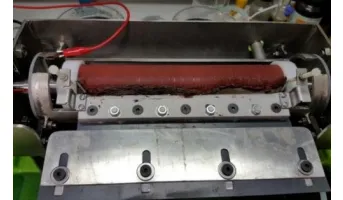
Industrial electrowinning is one such example where archaic technology has become the norm, with innovation being limited simply because the process is “good enough”. After doing a fundamental analysis on the electrowinning process, the design team has invented a dynamic solution which improves on


Many filtration systems overlook a major issue for oxygen-sensitive liquids like wine: oxidation during transfer and filtration. Even small amounts of oxygen can degrade quality. This apparatus provides a closed, inert-gas-pressurized filtration system that keeps wine fully protected from oxygen
The technology relates to an innovative process for converting waste cooking oils to biosurfactants that are applicable to various industries. The process utilises a special yeast strain to convert waste into biosurfactant at competitive concentrations. The downstream process includes a bioreactor
During beer production, around 2–4% excess yeast is generated and removed, causing significant beer loss of up to 400 mL for every litre of yeast discarded. Since beer production is highly water-intensive (about 3.5 L of water per litre of beer), this loss also represents substantial wasted water