

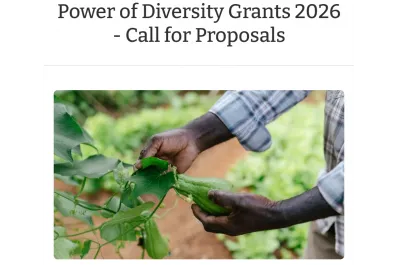
The Power of Diversity Funding Facility has officially launched the Power of Diversity Grants 2026, a EUR 2.2 million funding programme supporting projects that strengthen the value chains of underutilised, climate-resilient, and nutritious opportunity crops across six countries.
The programme aims to improve food security, nutrition, climate resilience, market access, and livelihoods by investing in targeted interventions for selected crops identified through national stakeholder consultations.
The funding initiative is managed by the Crop Trust and supports practical, scalable, and locally driven projects focused on improving production systems, post-harvest processing, value chain coordination, consumer awareness, and market development.
Funding Information
- Total funding available: €2.2 million
- Typical project budget range: USD 100,000 – USD 200,000
- Funding type: Grant funding
- Project duration: Until 31 March 2029
- Project kick-off date: 1 October 2026
Application Timeline
- Call launch date: 12 May 2026
- Questions submission deadline: 25 May 2026
- Virtual briefing session: 29 May 2026 at 15:00 CEST
- Application deadline: 3 July 2026
- Notification of successful applicants: 10 August 2026
- Project implementation start: 1 October 2026
- Project completion deadline: Before 31 March 2029
Eligible Countries
The programme is open to projects implemented in:
- Kenya
- Nigeria
- Zambia
- Tanzania
- Uganda
- Colombia
Opportunity Crops and Intervention Areas
- Nigeria
Fonio
- Good agricultural practices and processing
- Public awareness raising
Pigeon pea
- Seed systems development
- Public awareness raising
2. Zambia
Sorghum
- Seed system development
- Production and storage equipment and technology
- Value chain linkages
Cowpea
- Seed system development
- Production and storage equipment and technology
- Value chain linkages
3. Kenya
Finger millet
- Integrated Good Agricultural Practices (GAP) and market linkages
- Strengthening value chain governance and coordination
Amaranth
- Awareness, demand creation, advocacy, and enabling environment support
4. Colombia
Chontaduro
- Agroecological pest management and improved seed systems
Chayote
Consumer demand and awareness campaigns
5. Tanzania
Sweet potato leaves
- Strengthening value chain coordination and consumer awareness
- Improving access to innovative technologies
Bambara groundnut
- Strengthening value chain coordination and consumer awareness
Improving access to innovative technologies
6. Uganda
Pumpkin
- Good agricultural practices and integrated pest management
- Consumer demand and awareness
- Processing and value addition
Amaranth
- Market-oriented processing and value addition
Off-season production and water management
Who Can Apply?
Eligible applicants include:
- Non-governmental organisations (NGOs)
- Research organisations
- Agricultural cooperatives
- Farmer organisations
- Agribusinesses
- Civil society organisations
- Development organisations
- Private sector entities
- Universities and agricultural institutions
Eligibility Requirements
Applicants must:
- Demonstrate at least 3 years of in-country technical experience
- Have relevant expertise in the proposed intervention area
- Demonstrate sufficient financial capacity
- Show annual average turnover between 2023–2025 exceeding the proposed project budget
- Submit proposals in English
- Apply through the official online portal only
Eligible Activities
Projects should support:
- Seed system development
- Good agricultural practices
- Processing and value addition
- Post-harvest technologies
- Market linkages
- Consumer awareness campaigns
- Climate-smart agriculture
- Value chain coordination
- Agricultural technology access
- Water management solutions
- Agroecological production systems
Proposal Requirements
Applications should include:
- Clear project objectives and expected outcomes
- Detailed implementation activities
- Milestones and deliverables
- Budget justification
- Sustainability and scale-up pathway
- Stakeholder engagement strategy
- Linkages with existing initiatives
- Integration of crop diversity conservation
- Inclusion of national genebank roles where applicable
Selection Process
Applications will be evaluated by an expert panel established by the Crop Trust.
Projects will be assessed based on:
- Technical quality
- Feasibility
- Potential impact
- Sustainability
- Scalability
- Alignment with intervention priorities
- Financial and operational capacity
The programme aims to support a balanced portfolio of interventions across crops, countries, and value chain activities.
Click HERE to visit the official website