


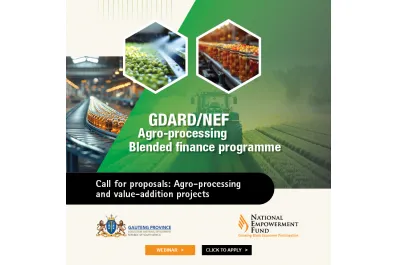
The National Empowerment Fund (NEF), in partnership with the Gauteng Department of Agriculture and Rural Development (GDARD), launches the Agro-processing Blended Finance Programme a transformative funding initiative designed to empower Black-owned agro-processing enterprises in Gauteng to scale operations, increase value-addition, access markets and create sustainable employment. This programme represents a strategic commitment to drive inclusive economic participation, food security and transformation within Gauteng's agricultural value chains.
The programme recognizes that many promising agro-processing businesses struggle to access affordable capital for growth and expansion. By combining grant funding (30%) with concessional loans (70%) at preferential interest rates, the programme removes financial barriers and enables Black-owned entrepreneurs to invest in modern facilities, equipment, technology and market-access initiatives that drive competitiveness and profitability.
This is a critical opportunity for Black-owned agro-processing entrepreneurs in Gauteng to scale validated business models, create employment, contribute to food security and build sustainable enterprises that compete in local and export markets.
What This Programme Funds
The GDARD/NEF Agro-processing Blended Finance Programme supports value-addition and agro-processing projects across the entire agricultural value chain, including:
Agro-Processing Sub-Sectors:
- Grains and cereals: Milling, grinding, fortification, packaging
- Fruits and vegetables: Drying, canning, juicing, pulping, preserving, frozen products
- Meat and poultry: Processing, packaging, branding, cold storage
- Dairy and animal products: Yogurt, cheese, butter, milk powder production
- Beverages: Juice extraction, bottling, fermentation, tea/coffee processing
- Spices and herbs: Drying, grinding, packaging, certification
- Specialized crops: Hemp processing, cannabis products (compliant), chilli processing
- Aquaculture and fisheries: Fish processing, value-added fish products
- Bakery and prepared foods: Bread, pastries, ready-to-eat meals
- Organic and specialty products: Certification, branding, premium market positioning
Funded Activities Include:
1. Capital Infrastructure and Equipment
- Construction or expansion of processing facilities
- Purchase of modern processing equipment and machinery
- Installation of food safety and quality control systems
- Technology upgrades and automation
- Cold storage, refrigeration and preservation infrastructure
- Packaging equipment and labeling systems
- Quality assurance and testing equipment
- Energy-efficient technologies and renewable energy systems
2. Working Capital and Operations
- Raw material procurement and inventory management
- Operational expenses for scaling production
- Staffing and capacity building
- Product certification and regulatory compliance
- Packaging materials and product branding
- Transportation and logistics infrastructure
3. Market Access and Business Development
- Market research and feasibility studies
- Product development and innovation
- Branding, labeling and marketing materials
- Export certification and compliance (e.g., GlobalGAP, FSMA)
- Trade show and exhibition participation
- Digital marketing and e-commerce platforms
- Distribution network development
- Customer acquisition and retention programs
4. Regulatory Compliance and Certification
- Food safety and hygiene certifications
- Health and safety compliance systems
- Environmental compliance and pollution control
- B-BBEE compliance and empowerment initiatives
- SARS and tax compliance
- Legal and governance structures
- Insurance and risk management
5. Human Capital and Skills Development
- Staff training and skills development
- Management and technical expertise
- Apprenticeship and internship programs
- Leadership development for women and youth
- Health and safety training
Programme Objectives
The GDARD/NEF Agro-processing Blended Finance Programme aims to:
Promote Value-Addition and Agro-Processing
- Increase value-addition along agricultural value chains
- Reduce post-harvest losses through processing
- Create higher-margin products and revenue streams
- Support local and regional agricultural production
Support Inclusive Black Economic Participation
- Empower Black-owned enterprises with growth capital
- Create opportunities for historically disadvantaged communities
- Priority for women entrepreneurs, youth and persons with disabilities
- Build Black-owned supply chains and industries
Facilitate Market Access and Competitiveness
- Enable businesses to meet export and international standards
- Support entry into high-value markets
- Develop competitive products and brands
- Strengthen supply chain participation
Drive Job Creation and Transformation
- Create direct employment in agro-processing
- Support indirect employment in supply chains and distribution
- Build skills and economic opportunities
- Transform Gauteng's agro-industrial ecosystem
- Support localization and local sourcing
Enhance Food Security and Economic Resilience
- Increase local food production and processing capacity
- Reduce import dependency
- Build resilient agricultural value chains
- Support sustainable livelihoods for farming communities
Blended Finance Model:
The programme combines two funding sources to maximize impact and affordability:
Amount (of R10M Max)
Terms
Grant Component
30%
Up to R3,000,000
Non-repayable; reduces debt burden
Concessional Loan
70%
Up to R7,000,000
Preferential interest rates; extended repayment
Total Maximum Funding
100%
Up to R10,000,000
Blended finance package
Funding Benefits:
- Lower total cost of capital: Grant component reduces equity or debt required
- Preferential loan terms: Concessional rates more favorable than commercial financing
- Extended repayment periods: Loan repayment aligned with cash flow from agro-processing operations
- Risk mitigation: Grant cushions against initial operational challenges
- Flexible structuring: Tailored to project viability and applicant capacity
Eligibility Criteria
To qualify for the GDARD/NEF Agro-processing Blended Finance Programme, applicants must meet ALL of the following requirements:
Ownership and Management Requirements:
1. Black Economic Empowerment (BEE) Status
- Must be at least 51% Black-owned (Black as defined in BEE scorecard)
- Must be actively managed by Black individuals
- Ownership must be substantiated through CIPC registration and share certificates
- BEE dividend commitments and empowerment initiatives required
- Valid B-BBEE certificate or scorecard documentation required
2. Incorporation and Legal Status
- Must be incorporated in South Africa under:
- Companies Act, 2008 (Pty Ltd, Close Corporation, or other registered entity), OR
- Co-operatives Act, 2005 (registered cooperative)
- Must be legally registered and in good standing
- CIPC registration documents required
- All required constitutional documents (MOI, shareholder agreements, etc.)
Business and Operational Requirements:
3. Sector and Activity Requirements
- Must operate in agro-processing or value-adding sector
- Eligible sub-sectors include:
- Food and beverage processing
- Grains, fruits, vegetables, herbs and spices
- Meat, poultry and dairy processing
- Bakery and prepared foods
- Specialized and organic products
- Aquaculture and fisheries
- Hemp and cannabis (compliant with regulations)
- Other legitimate agro-processing activities
- Must add measurable value to raw agricultural products
- Business must demonstrate clear processing/transformation activity
4. Market Access and Offtake Agreements
- Must have credible offtake agreements with established buyers
- Offtake agreements must be:
- Signed and legally binding
- With recognized buyers (retailers, wholesalers, exporters, institutions)
- Realistic in terms of volume and pricing
- Supportive of business viability projections
- Agreements demonstrate market demand and revenue certainty
- Market assessment reports or letters of intent acceptable for emerging businesses
5. Operational Status and Geographic Requirements
- Must be actively operating within the Gauteng Province
- Primary business operations must be located in Gauteng
- No requirement for minimum operating period, but operational proof required
- Gauteng address with business license and facility documentation
Financial and Compliance Requirements:
6. Tax and Financial Compliance
- Must have valid SARS Tax Clearance PIN
- Tax affairs must be in good standing
- No tax arrears or outstanding assessments
- Compliance with tax filing obligations demonstrated
7. Labour Compliance
- COIDA registration (Workers' Compensation) required
- UIF registration (Unemployment Insurance) required
- Payroll records and salary documentation required
- Compliance with labour laws and regulations
- Health and safety standards compliance
8. Municipal and Regulatory Compliance
- Valid Municipal Business Licence
- Proper zoning for agro-processing activities
- Environmental compliance (EIA Record of Decision or waiver)
- Food health and safety certification required
- Water rights registration/approval (if water-intensive)
- Building plans and municipal approval (if applicable)
9. Social and Economic Impact
- Clear articulation of empowerment dividend (jobs created and retained)
- Commitment to transformation and inclusivity
- Priority consideration for:
- Women-owned enterprises
- Youth-owned enterprises (under 35 years)
- Persons with disabilities (ownership or employment)
- Rural-based enterprises
- Emerging black entrepreneurs
- Demonstrated community benefit and local economic impact
Who Cannot Apply
The following are ineligible:
- Non-Black-owned businesses or businesses with less than 51% Black ownership
- Businesses not actively operating in Gauteng
- Non-agro-processing businesses (e.g., pure farming without value-addition)
- Unregistered entities or entities incorporated outside South Africa
- Businesses without offtake agreements from credible buyers
- Entities not in good tax standing or with SARS compliance issues
- Businesses not registered with COIDA, UIF and municipal authorities
- Previously funded applicants with non-performing loans from NEF or other funders
- Political organizations or entities with governance issues
- Businesses engaged in illegal activities
- Entities with director or shareholder disqualifications
Application Process and Timeline
Phase 1: Pre-Application (November–December 2025)
Information Session Webinar
- Date: 2 December 2025
- Content: Programme objectives, qualifying criteria, application procedures, documentation requirements, guidance on completing applications
- Format: Online webinar
- Attendance: Strongly recommended for all potential applicants
- Registration: Details on GDARD social media pages (@officialGDARD, @official_gdard)
Preparation Activities
- Review all application requirements and documentation checklists
- Gather required documents (financial statements, CIPC registration, tax clearance, etc.)
- Prepare detailed business plan and financial projections
- Secure offtake agreements or letters of intent from buyers
- Organize all supporting documentation systematically
Phase 2: Application Submission (25 November 2025 – 17 January 2026)
Application Method:
- Portal: Online submission only via GDARD/NEF portal
- Website: www.nefcorp.co.za or GDARD social media platforms
- No hard-copy submissions accepted – electronic submissions only
- Deadline: 17 January 2026 (hard deadline)
Required Submission Documents (8 Categories):
Category 1: Standard Documents
- Board Resolution authorizing the GDARD/NEF application and naming signatories
- Completed GDARD/NEF Application Form (official template)
- Signed ITC Consent form
- PEP Declaration (Politically Exposed Persons)
- Personal Assets & Liabilities statement (all shareholders/directors)
- Income & Expenditure form (all shareholders/directors)
Category 2: FICA – Shareholders & Directors
- Certified ID copies (all shareholders/directors)
- Proof of residence (recent utility bill, lease agreement, etc.)
- Marriage certificates or ANC agreements (if applicable)
Category 3: Company Documents
- CIPC registration documents:
- Certificate of Incorporation (CK)
- Memorandum of Incorporation (MOI)
- Share certificates
- Shareholders or Cooperative Agreement
- Valid SARS Tax Clearance PIN
- B-BBEE Certificate or scorecard
- COIDA registration/certificate
- UIF registration/certificate
- Municipal Business Licence (valid)
Category 4: Regulatory Compliance
- Municipal approval letter
- Stamped building plans (if applicable)
- Zoning Certificate (confirming agro-processing permitted use)
- EIA Record of Decision or Waiver (if environmental assessment required)
- Food Health & Safety Certificate
- Water Rights Registration/Approval (if applicable)
Category 5: Financial Documents
- Detailed funding breakdown (how funds will be used)
- Quotations or Bills of Quantities (BOQs) for items to be funded
- Past 3-year Audited Financial Statements (if available)
- 6-month Bank Statements (most recent)
- Latest Management Accounts
- 5-Year Financial Projections with stated assumptions
- Debtors/Creditors Age Analysis and agreements
Category 6: Technical & Market
- Production process flow diagram and description
- Lease Agreement, Title Deed, or Permission to Occupy (PTO)
- Supplier Agreements (for raw materials)
- Offtake Agreements (with credible buyers) or Market Assessment Report
- Competitive analysis (top 3 competitors and your competitive advantage)
Category 7: Corporate Governance & HR
- Group structure and organogram (post-funding structure)
- CVs/profiles of shareholders, directors and key management
- Empowerment dividend summary (jobs retained and created; wage impact)
- Payroll documentation plus 5 sample payslips
- Projected salary and wage budget
Category 8: Construction & Infrastructure (if applicable)
- Municipal-approved architectural plans
- Engineering and electrical plans (stamped)
- Bill of Materials (signed by Quantity Surveyor)
- Principal Contractor profile
- Contractor's B-BBEE certificate
- Contractor references and experience
Phase 3: Application Review and Evaluation (January-March 2026)
- GDARD/NEF team reviews all submitted applications for completeness and compliance
- Initial screening: Verification of mandatory requirements
- Detailed assessment: Evaluation against programme criteria (viability, transformation impact, market access, etc.)
- Due diligence: Financial analysis, legal verification, site inspection (if needed)
- Scoring and ranking: Applications ranked by merit and strategic fit
Phase 4: Approval and Award (March-May 2026 estimated)
- Notification of results: Selected and unsuccessful applicants notified
- Approval letter: Award letter outlining funding amount, terms and conditions
- Loan agreement execution: Signing of legal agreements with NEF
- Fund disbursement: Funds released according to milestone-based disbursement schedule
CLICK HERE TO VISIT OFFICIAL WEBSITE