

By Adekunle Agbetiloye, Business Insider Africa
10 December 2025, 08:10 AM
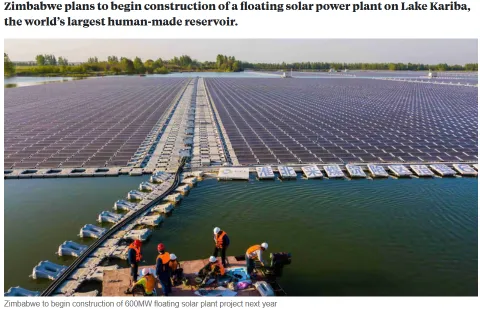
Zimbabwe plans to begin construction of a 600MW floating solar power plant on Lake Kariba, the world’s largest human-made reservoir, as part of efforts to address worsening electricity shortages and improve energy security. The project is scheduled to start in the second quarter of 2026, with the initial phase to be built on land adjacent to the lake before solar panels are ultimately installed on the water surface.
The initiative aims to diversify Zimbabwe’s energy mix and reduce dependence on hydropower from Kariba, which has become less reliable due to recurrent droughts that have sharply reduced output. At present, Kariba is generating around 550MW of electricity, significantly below its installed capacity of about 1,050MW, leaving the country vulnerable to power shortages and load shedding.
Because Lake Kariba is shared between Zimbabwe and Zambia, the project requires bilateral approval and coordination between the two governments. Zimbabwe’s largest power users, organised in a consortium, secured approximately US$4.4 million from the African Export–Import Bank to fund a full feasibility and bankability study for the development. The total project cost is estimated at around US$650 million, with completion targeted for 2031, and is expected to leverage private sector investment.
The planned floating solar plant forms part of a broader national effort to accelerate renewable energy deployment, improve grid stability and support industrial growth. By utilising existing hydropower infrastructure at Kariba and supplementing it with large-scale solar generation, Zimbabwe aims to make more efficient use of transmission assets while mitigating climate-related risks to water-dependent generation.