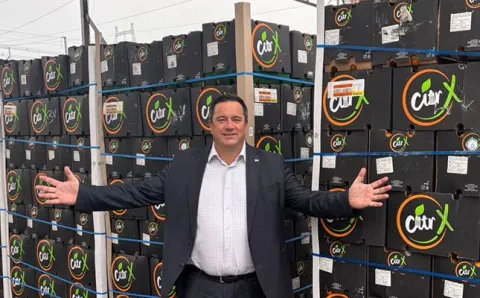


In a year-end message, Minister of Agriculture John Steenhuisen reflects on how 2025 strengthened South Africa’s agricultural sector across seven core priorities: partnerships, regulation, market access, farmer support, biosecurity, advocacy and food security. He notes that despite global economic uncertainty, climatic pressures and geopolitical shifts, the sector grew in strength, confidence and unity, driven by collaboration across farmers, industry, scientists, youth and communities.
On partnerships for growth, the Department deepened engagement with organised agriculture and commodity organisations, helping to identify regulatory bottlenecks and co-design inclusive solutions. A flagship example was the Jozini Smallholder Farmer Programme in KwaZulu-Natal, launched with Unilever South Africa and the provincial department to support 100 smallholder farmers with training, inputs, technical support and secure market off‑take, shifting the model from “grow and sell” to “grow to sell”. Engagements with the beekeeping industry in the Western Cape highlighted the strategic importance of pollinators to national food systems.
A modern, progressive regulatory environment was advanced through several reforms. These included revoking Leaf Services as an assignee under the Agricultural Product Standards Act to avoid unnecessary cost increases in grain and bread value chains, and approving the inclusion of indigenous crops and medicinal plants under the Marketing of Agricultural Products Act, formally recognising a roughly R12 billion sector and opening new opportunities for small-scale and traditional producers. The Department also digitised the pesticide registration process, with full implementation targeted for April 2026, and published draft export regulations to update standards and improve competitiveness.
On market access, South Africa regained access for fresh apples into Thailand, opened the Philippines for table grapes, secured new protocols for avocados to China and extended citrus access into Vietnam. A landmark stone fruit protocol signed in Shanghai allows five South African stone fruit categories into China under a single agreement, projected to unlock about R400 million in the next five years, while G20 Agriculture Working Group and Ministerial engagements helped secure a Food Security Task Force Declaration framed around Ubuntu as a guiding principle. Regionally, the Department worked with Botswana to reopen maize and wheat exports following a disease-related suspension and continued challenging EU phytosanitary measures on citrus, citing a non-compliance rate below 0,03% for South African exports.
Farmer support remained a core focus. The Department invested R1,7 billion in funding reaching more than 6 000 farmers, with a further R448 million via the Ilima/Letsema programme to support household food production and create over 9 000 jobs. More than 3 000 agricultural graduates were placed in the sector and over 66 000 farmers trained through extension services, while a memorandum of intent with Brazil’s agriculture ministry opened cooperation on sustainable agriculture, livestock systems and training. Work progressed to integrate all 11 agricultural colleges into the higher education system to ensure nationally recognised, future-oriented qualifications, and efforts against stock theft were intensified through partnerships with SAPS, traditional leaders and the Red Meat Industry Services on a national livestock traceability platform.
Under the theme “biosecurity is everybody’s responsibility”, the Minister convened an FMD Indaba and established an Industry Government Task Team, leading to a new “FMD-free with vaccination” policy direction. Agreements were reached with the Botswana Vaccine Institute to supply one million FMD vaccine doses monthly from January, while a Livestock Identification and Traceability System, developed with CSIR, is being rolled out from early 2026 to track animal movements via geo-location. Regulations and schemes under the Animal Diseases Act are being updated to support vaccination in the dairy and feedlot industries, and at least 5% of Comprehensive Agricultural Support Programme funds will be ring‑fenced for FMD control. The year also saw launch of a national avian influenza vaccination programme, deeper collaboration with the University of Pretoria’s National Biosecurity Hub, and renewed efforts to turn around Onderstepoort Biological Products and restore local vaccine manufacturing through a public–private partnership model.
On advocacy, the Minister engaged multiple portfolios on ports, rail, rural infrastructure, water licensing, municipal services, trade agreements and customs to remove cross‑cutting constraints. Proposals included an automated wheat tariff mechanism to reduce delays and market distortions, and the creation of an inter-ministerial task team between Agriculture, Trade, Industry and Competition, and International Relations and Cooperation to better align trade and investment strategies with sector needs.
In terms of food security, survey results highlighted severe hunger in provinces like the Eastern Cape, where over 31% of households face insufficient access to food. On World Food Day in Gqeberha, the Department emphasised a whole-of-society approach, including school gardens, community food hubs, smallholder support, and promotion of indigenous and underutilised crops such as amaranth, African leafy vegetables and Bambara groundnuts, alongside the launch of a World Food Forum Youth Chapter to give young people a voice in shaping food systems. International engagements at the G20, G7 and AU are expected to bring further partnerships for small-scale farmers and community food initiatives.
Looking ahead, the Minister notes that employment in agriculture increased by 2% in 2025, adding 14 000 jobs and bringing total employment to about 920 000, while citrus exports reached a record 203,4 million cartons around 22% higher than in 2024 reflecting growing confidence and capability in the sector. For 2026, priorities include strengthening partnerships, further modernising legislation, expanding market access, deepening farmer support, intensifying biosecurity reforms, advocating across government and driving a collective mission to end hunger.
Click HERE for the full article.