Surfactants are amphipathic molecules with both hydrophilic and hydrophobic moieties that partition preferentially at the interface between fluid phases, such as oil/water or air/water interfaces. Such characteristics confer excellent detergency, emulsifying, foaming, and dispersing traits, which
HIV/AIDS continues to disproportionately impact sub-Saharan Africa, where it remains a leading cause of illness and death among children. Paediatric HIV progresses at an alarming rate, with 20–30% of untreated infants succumbing to the disease within their first year. Without timely intervention
This technology offers a next-generation creatine powder formulated with food-grade components that enable instant mixing in water and long-term shelf stability. When added to liquid, the powder disperses rapidly and forms a clear, grit-free solution within seconds, avoiding the sedimentation and
This technology relates to the transdermal treatment of diabetes. In particular, to a formulation for the transdermal delivery of the photoactive antidiabetic agent diosgenin that is encapsulated and protected by an oil-in-water nanoemulsion matrix for the treatment of type 11 diabetes Mellitus
The innovation is the rational combination of ezetimibe and curcumin for the treatment of colon cancer- which means one can apply a cancer therapeutic, orally. This would have significant value to the African population and solve key issues like the packaging and distribution of chemotherapeutic

This invention is an electronic medical, digital device that computes and grades the stages of Asthma aetiology and severity using wearable biosensors and environmental Nanosensors, with the capacity to predict imminent Asthma attacks and future attacks. The Asthma grid uses an algorithm to compute

The invention relates to the scavenging of flavour compounds, typically undesirable or off-flavours, from a liquid beverage or foodstuff. In particular, the invention relates to the use of proteins for scavenging flavour compounds associated with dairy products, such as those which arise from heat
The compound 1, 3, 6, 8–tetrahydroxy –2, 5-dimethoxyxanthone (formula (I)), having the ability to treat sexual dysfunction or erectile dysfuncion, is claimed. A process for obtaining a plant extract containing this compound, an extract and the use of this compound or extract in manufacturing a
The invention relates to a process for producing protein microparticles in dilute organic acid solutions, without the presence of an alcohol such as ethanol. The microparticles are formed by dissolving a cereal prolamin protein in a concentrated organic acid solution with agitation, followed by
2

A reusable sanitary pad that is uniquely designed to collect, retain and dispose of menstrual fluid. The reusable pad is used externally, it is hygienic and easy to clean. The most commonly used and commercially available menstrual hygiene products in South Africa are tampons and sanitary pads. The

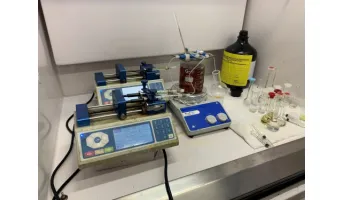
This invention is continuous flow reactor technology used to manufacture active pharmaceutical ingredients (APIs) for various drugs. These include AIDS ( Emtricitabine, Lamivudine and Efavirenz), TB (Isoniazid), influenza (Tamiflu) and diabetes (Gliclazide, chlorpropamide, glipizide, glibenclamide
Researchers at Stellenbosch University have developed a groundbreaking new polymer having permanent antimicrobial properties. The compound can be spun into nanofibers for the production of filter elements or membranes, which successfully filter out micro-organisms and eliminate harmful bacteria. A