The process consists of two continuous stages carried out under inert, vacuum conditions. In the first stage, cold feedstock is fed into a preheating vacuum oven for ex-situ desulphurization. It is heated to a controlled temperature for a set time to break sulphur–sulphur and sulphur–carbon bonds
This technology uses Unmanned Aerial Vehicles (UAVs) fitted with a camera to calibrate heliostats in large Concentrating Solar Power (CSP) or Concentrating Solar Thermal (CST) tower systems. The UAV does not have a single fixed position and provides several advantages over traditional methods using
A computer implemented method, system or programme for combining a three-dimensional PET scan and a CT scan of a body into a combined image for segmentation, comprising of: Co-registering each of the PET scan and the CT scan as an input with reference to each other. Extracting metadata from the
The PureLite Reactor™ provides a highly efficient and customisable platform for various applications. Its energy-efficient LED light sources, advanced control systems, and versatile design give researchers precise control over photochemical reactions, making it a vital tool in environmental science

A method for inference based on multivariate message-based graph structures and not the well-known Tanner Graph structure. Tanner graphs are known to have poor convergence with variables greater than 1, to compensate LDPC codes are created to avoid this scenario. The invented method allows for
The flotation device is an engineered support system designed to protect mobile structures from flood-related damage. Mobile structures such as temporary housing units, construction site offices, or warehouse equipment are highly vulnerable in flood-prone areas. This technology addresses that
Current Proton Exchange Membranes (PEMs), especially Nafion, are costly and produced mainly by a single international supplier (DuPont/Chemours). This monopoly escalates the cost of fuel cells and electrolyzers and limits local manufacturing capacity in South Africa. Because PEMs are the major
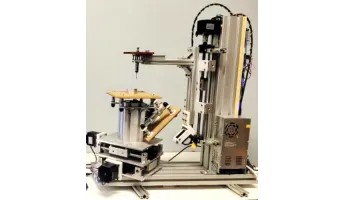
South Africa's manufacturing sector, particularly in automotive, aerospace, medical devices, and electronics, requires high-precision measurement tools. The proposed Coordinate Measuring Machine (CMM) addresses this need by offering enhanced accuracy and cost-effectiveness compared to traditional