Surfactants are amphipathic molecules with both hydrophilic and hydrophobic moieties that partition preferentially at the interface between fluid phases, such as oil/water or air/water interfaces. Such characteristics confer excellent detergency, emulsifying, foaming, and dispersing traits, which
The Vapour-Based Passive Multistage Solar Desalination System offers a sustainable and efficient solution for desalinating water using solar energy. The system is designed to operate off-grid, utilizing solar heat to drive the desalination process, making it ideal for remote areas where access to

The invention relates to the use of maghemite nanoparticles at pH < 5 to remove sulphate, manganese, copper, nickel, cobalt and zinc metal ions from acid mine drainage (AMD). In a conventional way of AMD treatment, these pollutants are only removed at higher pH and requires costly alkaline chemicals


A method and apparatus for treating a fluid utilising nanoscience. The impurities in the fluid are trapped by the charged nanoparticles. The fluid is contained in a reactor that includes a moving magnetic system. When the reactor is in use, the moving magnetic system excites the charged

The invention is a leakage detection system for water pipelines installed in partially saturated soils. Most soils in South Africa and the rest of Africa are partially saturated because the water table is usually deep. Given the large amount of water lost from water distribution systems worldwide
2
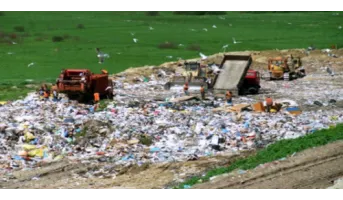
The invention The invention uses plastic waste and Waste Foundry Sand (WFS) to produce building and construction material with a density of between 1700 and 1750 kg/m 3 . The plastic is melted and WFS is used to produce a paste for the moulding of building material. Problem solved Plastics are vital

Activated Carbon: Local Production Using Local Nuts The invention describes a novel method of producing activated carbon from locally available nut shells. The invention provides a method to carry out carbonation and physical activation simultaneously via a pyrolysis process. This process produces

Biosurfactants produced by Pseudomonas aeruginosa SB24 (rhamnolipid congeners), Bacillus amyloliquefaciens ST34 (surfactin and bacillomycin L analogues and homologues) and pigmented (P1) and non-pigmented (NP1) Serratia marcescens strains (serratamolide and glucosamine derivative homologues) were
The Department of Chemical Engineering at Stellenbosch University has developed a novel solvent-based process for extracting cannabinoids directly from plant-wax waste streams generated during industrial processing. The method uses a simple but effective combination of two immiscible solvents, one