3

Connecting Communities Zenzeleni is a solar-powered, community-owned Wifi telecommunications network solution providing affordable communications to remote rural areas. Through the use of wireless mesh networking, users are able to make free internal voice-over IP calls, while the cost of breakout

3

Baobab LIMS is an African-led innovation that was developed as part of the B3Africa consortium. It is an affordable sample and laboratory management tool for biobanking that has been implemented in low- and middle-income countries (LMICs), which previously (due in part to financial constraints)

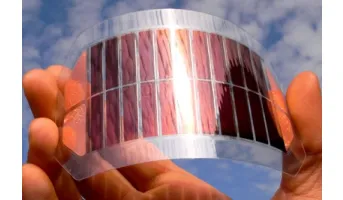
The Solar Tracker has been developed at the Cape Peninsula University of Technology. It is an efficient mechanism for positioning a solar collector to track the sun. This device is adept to intermittent adjustment of the position of a solar energy collection surface, ensuring that the surface

Fly ash is a waste by-product generated by coal-fired electricity power stations. Due to its environmental impact, there is a growing need for safe and sustainable methods of fly ash disposal. One effective approach is the beneficiation of fly ash through the production of zeolites—a class of
The North-West University (NWU) has pioneered the novel use of Europium-Tellurium-Oxide (ETO) in the production of clean energy. ETO is a light-chargeable catalyst material that exhibits sustained and enhanced activity after light excitation has ended. Its unique characteristics present an
In a COVID-context there is a necessity for social distancing. Consequently, managers of public spaces or institutions may be tasked with the enforcement or monitoring of this requirement. A result is that the real-time tracking of pedestrian movement in public spaces has become a growing reality
The inverse Class-F power amplifier (PA) comprises an appropriately biased GaN active device, input matching network, and output wave-shaping and matching network. The novel design of the wave-shaping and output matching network ensures minimal overlap of the drain voltage and current waveforms, and
This technology involves a method for generating hydrogen in an electrolysis cell. A proton exchange membrane (PEM) is used to separate anode and cathode chambers of the cell. The space between the anode and the PEM is filled with aqueous sulfuric acid. In use, gaseous sulphur dioxide is fed to the
This technology utilises a microchannel reactor for the decomposition of ammonia, comprising two chambers: one for exothermic combustion of ammonia to generate heat. A second chamber of the reactor with a second catalyst receives a second stream of ammonia to provide endothermic decomposition of the
The North-West University (NWU) has developed and patented a method for producing hydrogen via hydrolysis, using an activated aluminium compound. Technology Benefits: Aluminum also can be recycled after the hydrogen production process. Hydrogen can be produced under high pressure. By-products are

Hydrogen and fuel cell technologies offer zero emissions and are a clean alternative to fossil fuels. HySA Systems, at the University of the Western Cape, have made improvements in the performance, reliability and cost competitiveness of fuel cell components and systems. These have been demonstrated

The technology relates to an application that allows the efficient delivery of groceries ordered online by using a car lift service from general road drivers. Unlike existing delivery applications, this platform does increase the reliance on dedicated delivery vehicles but makes use of a network of